
Posted by Will on Feb 10th 2026
Bronze vs. Carbon Steel: Choosing the Right Face for Your Van Allen Golf Putter
For golfers seeking precision-engineered equipment, Van Allen Golf’s Signature Series Archie Blade Putter stands out with its material options, letting you pick the face that truly fits how you putt.
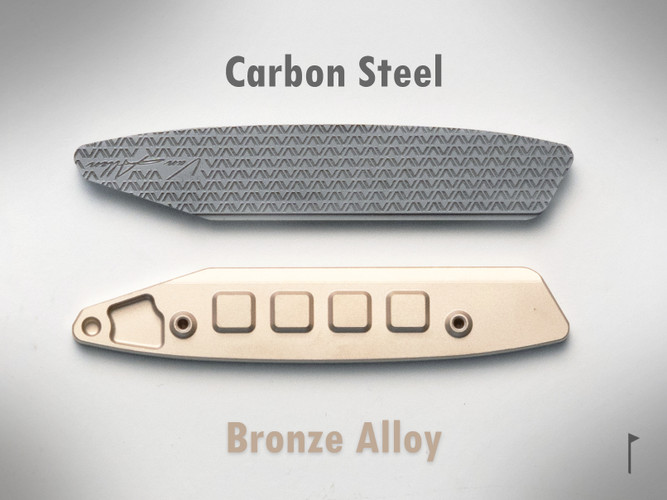
Van Allen’s putter bodies are precision-milled from billet stainless with an engineering focus on feel, balance, and durability. The face is milled separately, and here the two material choices play a huge role in how the club performs on the green. Whether you’re a feel player who loves that soft feedback or someone who prioritizes longevity, this breakdown has you covered. Let’s get into it!
A Quick Overview of the Materials:
- Bronze Alloy: A tin-based bronze prized for its wear resistance, machinability, and
physical compliance. It’s commonly used in bearings and bushings but shines in golf
putters for its softer touch. - Carbon Steel: A chromium-molybdenum alloy steel known for its strength, toughness,
and hardness profile. At Van Allen, we add a chromium nitride finish to every carbon
steel face for extra protection, making it a durable choice for consistent performance.
Long-Term Durability on the Green:
Durability matters when a putter face takes thousands of strikes. Carbon steel wins here with superior tensile strength (~655 MPa) and yield strength (415 MPa), giving it far better resistance to dents, scratches, and deformation.
At Van Allen Golf, we’ve worked tirelessly to refine the heat treatment of our carbon steel faces, optimizing hardness for superior resilience and feel. This not only bolsters resistance to dents and fatigue from countless strikes but also maintains consistent performance, ensuring your putter endures the rigors of the green season after season.
The bronze alloy, while tough for bronze (tensile ~241 MPa), is softer and typically better suited for medium-load applications. As a putter face it offers good wear resistance, but it will begin to show signs of use as the face ages (years, not months), especially if you’re a high-volume practicer. In our application the bronze face is built to hold up for even the most avid golfers, but bronze simply cannot match carbon steel in long-term durability.
Winner: Carbon steel for long-term toughness.
Softness and Feel:
Softness is what gives you that all-important “feel” at impact. The bronze alloy is the softer material here, delivering a muted, buttery feedback that players describe as premium and forgiving. It’s ideal if you want that classic responsive sensation on mishits.
Carbon steel, with its higher hardness, feels firmer but still “soft” compared to stainless steel. It gives crisp feedback that helps you gauge distance and speed precisely. Carbon steel putters like early Scotty Camerons are loved for their balanced softness without being mushy.
Winner: Bronze for ultimate softness; steel for a more responsive feel.
Sound:
Sound is subjective, but it’s tied to softness. The bronze face produces a duller, thud-like sound due to its lower density and vibration-damping properties — perfect for players who want a quiet, confidence-boosting stroke.
Carbon steel gives a slightly higher-pitched feedback, but not the bright “click” or ping you get from most stainless faces. The benefit is a hardened steel surface that still offers clear audible confirmation of solid contact. Our unique face lasering and coatings tune the sound profile toward muted while keeping the distinct feedback.
Winner: Depends on preference — bronze for subtle, steel for distinct.
Face Weight and Putter Balance:
Weight affects swing feel and stability. Bronze has a higher density (~8.9 g/cm³) than carbon steel (~7.85 g/cm³), so the bronze face is inherently heavier for the same volume. In our application the bronze option adds 10 grams, which boosts MOI for better forgiveness on off-center hits. That extra heft suits a smoother stroke; the lighter steel suits quicker tempo.
Winner: Bronze for added stability; steel for lighter maneuverability.
| Property | Bronze Alloy | Carbon Steel |
|---|---|---|
| Density (g/cm³) | 8.9 | 7.85 |
| Hardness (Rockwell) | B 35 | C 20 |
| Tensile Strength | 241 MPa | 655 MPa |
| Yield Strength | 138 MPa | 415 MPa |
Strike on the Face:
The face material directly influences roll and control. Bronze’s softness gives more “grab” on the ball, promoting true end-over-end roll with less skid; great for fast greens. On longer putts (30 ft+), however, you’ll notice higher compression and slightly more energy required.
Carbon steel’s firmness ensures clean energy transfer with minimal loss, delivering lively bounce and consistent speed. Steel often edges out for precision across varying conditions.
Winner: Steel for consistency; bronze for enhanced roll.
Wear and Maintenance:
This is where the two materials diverge most. Bronze will naturally tarnish and develop a patina that many golfers love for its vintage character. It resists corrosion in dry conditions but can oxidize with moisture; nothing a little maintenance can’t handle, and the patina actually adds personality.
Carbon steel wants protection, which is why we apply chromium nitride or PVD coatings. These finishes keep the face looking new longer, greatly slow rust, and improve wear resistance, making steel the lower-maintenance everyday choice.
Winner: Steel with coatings for minimal upkeep; bronze for aesthetic evolution.
Choosing Your Ideal Putter Face:
Choosing between bronze alloy and carbon steel for your Van Allen putter comes down to your playing style. Go bronze if you crave that soft, weighted feel with a touch of patina charm — it’s 10 g heavier and offers a forgiving strike. Choose carbon steel if durability, crisp feedback, and rust resistance are your priorities; its strength makes it a true workhorse.
This version keeps every point you cared about, reads like you wrote it (just polished), and flows naturally for the next blog. Let me know what you want to tweak or add for the next one!